
Beverage Packaging & Labels: Bottle-to-Cooler Guide
A beverage label has two jobs: run reliably on your line and remain acceptable through the conditions your customers will encounter. A beautiful proof answers neither question on its own. Start with the actual container, record the application and service conditions separately, then ask the supplier to qualify the finished construction against your requirements.
THE SHORT ANSWER
Pick the material by where the label will live, then price it. For beverage label printing, give each supplier the container reference, label dimensions, artwork revision, quantity by SKU, proposed construction, roll requirements and expected exposure. Define what your team will accept after application, storage, transport and use. Review physical performance separately from artwork approval, and keep that evidence with the approved specification.
Pick a material by where the label will live
Start with the conditions, not the material name. Our core is general-purpose acrylic adhesive labels on BOPP film: white, clear, silver or holographic, finished with a gloss, matte or soft-touch laminate. For utility labels, ask us about thermal transfer and direct thermal paper stocks.
Material picker
Where will your label live?
White BOPP, general-purpose acrylic adhesive
Conditions it suits
- Dry glass, rigid plastic or carton
- Room temperature, indoors
- Opaque white film under the print
- Gloss, matte or soft-touch laminate over the print
Clear BOPP, general-purpose acrylic adhesive
Conditions it suits
- A no-label look on glass or clear plastic
- The container or product shows behind the design
- White ink under any print that needs to read
- Gloss, matte or soft-touch laminate over the print
Silver BOPP, general-purpose acrylic adhesive
Conditions it suits
- A metallic silver film behind the ink
- Dry glass, rigid plastic or carton
- Film left unprinted where the silver should show
- Gloss, matte or soft-touch laminate over the print
Holographic BOPP, general-purpose acrylic adhesive
Conditions it suits
- A rainbow holographic film behind the ink
- Dry glass, rigid plastic or carton
- Film left unprinted where the hologram should show
- Gloss, matte or soft-touch laminate over the print
Squeeze BOPP
Conditions it suits
- Flexible PE bottle or tube
- Squeezed and flexed every use
- Wet hands in the kitchen or bathroom
- Room temperature
Beverage White with CHILL adhesive
Conditions it suits
- Applied cold or damp on the filling line
- Chilled storage, coolers and ice buckets
- Condensation as the product warms
- Glass or aluminum
Thermal transfer and direct thermal paper
Conditions it suits
- Utility labels printed on demand
- Barcodes, shipping, warehouse and date or lot codes
- Direct thermal for short-term use, thermal transfer for longer life
- Direct thermal kept away from heat and light
Specialty adhesives and paper stocks
Conditions it suits
- Freezer, outdoor, removable or wash-off requirements
- Wine, spirits and craft products on coated or textured paper
- A paper feel and texture in the hand
- Tell us the container and the conditions
Not sure which one? Tell our team the container and the conditions and we will point you to the right construction. Confirm it with a finished-label trial.
Why start in PackOS
Once you know the details, see the price, the dieline and your label on a roll in one place.
From file to price in PackOS
What you get in PackOS
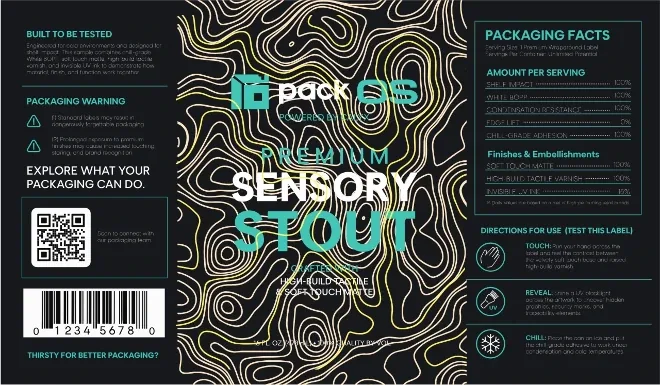
Skip the spec form
Upload a PDF or AI file and PackOS reads the size, shape, colors and finishes from your design. Nothing to retype.
Upload artwork →Instant price · sample label
| Run | Per label | Total |
|---|---|---|
| 10,000 | $0.1996 | $2,346 |
| 60,000 | $0.1692 | $10,500 |
| 110,000 | $0.1670 | $18,722 |
| 150,000 | $0.1663 | $25,290 |
| 200,000 | $0.1658 | $33,500 |
| 250,000 | $0.1655 | $41,725 |
Know the price before you ask
Every quantity is priced as soon as the file is read, with no waiting on a quote. Runs start at 10,000 labels per size with at least 2,500 per SKU. Your price depends on your artwork. Order online; the proof and a payment link follow by email.
Get instant label pricing →
Get a production dieline
No artwork yet? Draw the die with cut, bleed and safe-area lines so your designer starts from the right shape. We email it with your quote.
Create a label dieline →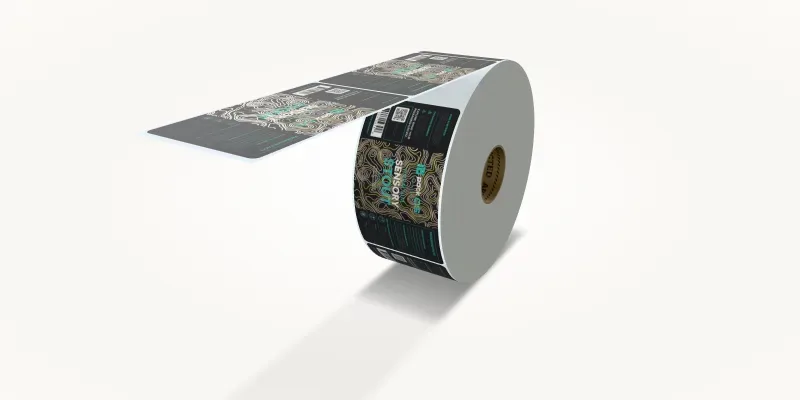
See it on the roll first
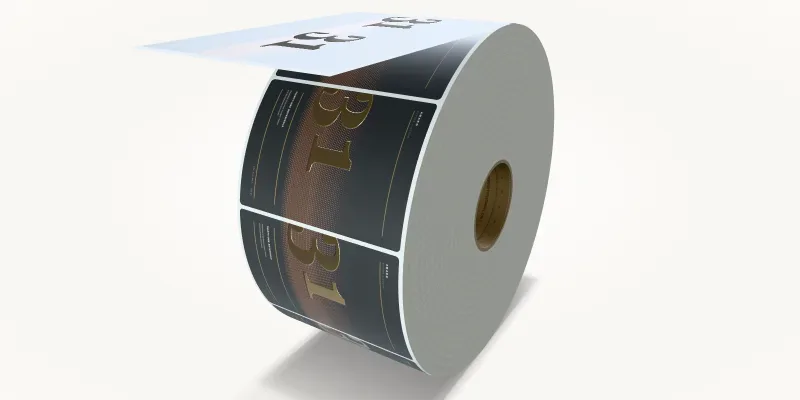
Turn your label on a 3D roll in the copy position you choose and check it before you order.
Upload artwork →Labels only. Foil, embossing and other specialty work are quoted by our team.
The beverage packaging job
Separate the primary container and closure from its decoration. Your filling and packaging partners establish the container requirements; this guide focuses on the label specification and approval record. A label must fit the chosen panel, run on the intended equipment and meet the appearance and performance criteria your team agrees.
Use the food and beverage packaging guide for broader planning. For food and beverage label printing, connect the artwork to the actual container and application requirements before requesting a production quote.
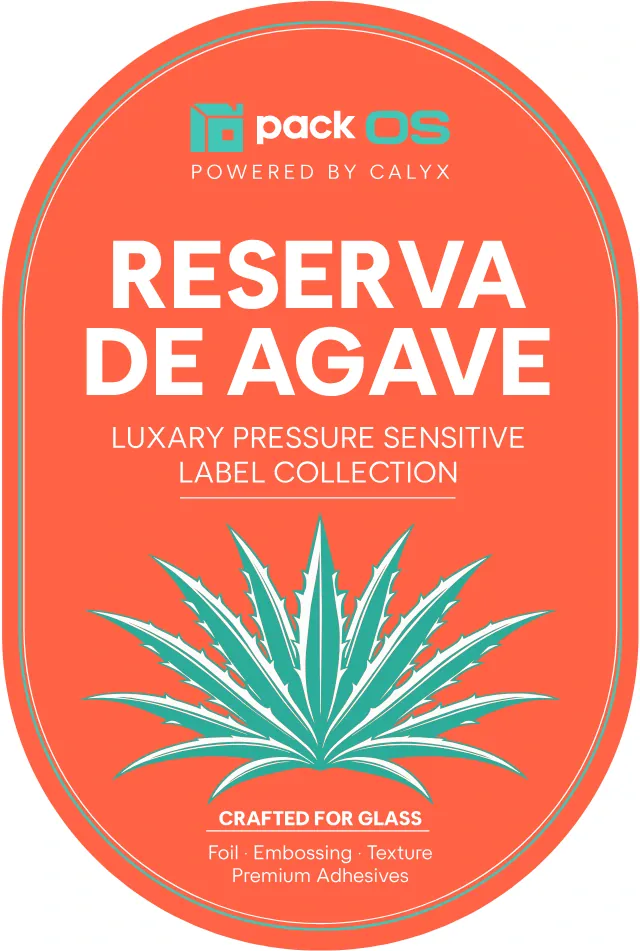
Food and beverage labels
Labels for bottles, cans and jars
See the stocks and adhesives we print for food and beverage brands, including Beverage White with CHILL.
See food and beverage labels →Container formats: questions to resolve first
| Container context | Ask the packaging partner | Record for the label |
|---|---|---|
| PET or other plastic bottle | Which supplier item, surface treatment and panel drawing are approved? | Material, geometry, label position and representative sample |
| Glass bottle | What surface or coating and dimensional variation should the trial represent? | Container reference, lot and intended label panel |
| Aluminum can | Which can profile, surface and decoration route suit the line? | Container drawing and the separate label or decoration requirement |
| Carton or pouch | Is decoration integrated into the purchased package or a separate label? | Only the separate label scope, if applicable |
Capacity alone does not determine label dimensions. Containers with the same fill volume can have different diameters, shoulders and panels. Obtain the supplier drawing and a representative sample. Confirm the label position with the container supplier and applicator operator before commissioning tooling.
Use the container label measuring guide for fit, and record a gap, butt join or overlap explicitly. An artwork upload can report file dimensions; it cannot verify fit on the physical container.
Labels, sleeves and direct decoration
A pressure-sensitive label is a separate adhesive-backed construction applied to a defined area. A shrink sleeve and direct container decoration use different artwork, tooling and application workflows. Review each route against the container drawing, equipment, artwork changes and supplier scope; no route wins on cost or flexibility in every case.
packOS currently quotes custom roll labels. Bottles, cans, closures, sleeves and integrated carton or pouch decoration are context for this article, not current quote offers. For roll labels, keep the face stock, adhesive, liner, print and finish together as one construction specification.
Separate artwork, construction and order approval
| Decision | Evidence to request | What it does not prove |
|---|---|---|
| Artwork approval | Approved revision, dieline, separations, copy and proof | Adhesion or application-line performance |
| Construction qualification | Construction code, representative printed samples and agreed trial results | That a different material, finish or container is equivalent |
| Order release | Quantity by SKU, roll format, delivery scope and named approval | That a future substitution can bypass review |
This gives brand, purchasing and operations a shared record. Proposed, sample-qualified and release-approved are different states. A file that passes preflight still needs the physical and commercial approvals relevant to the order.
Have your artwork? See the price for every quantity in seconds.
Get instant label pricing →Cold application, condensation and cooler service
Record the container surface temperature and condition when the label is applied. Then record what happens afterward: refrigerated storage, warming into humid air, wet handling or immersion. A construction rated for a particular service environment is not automatically approved for application to a wet container.
Ask for the relevant technical data and application advice for the actual construction. If conditions vary on the line, describe the range rather than one convenient reading. Trial the conditions you intend to approve.
Film and paper are candidate categories, not performance certificates. UPM’s beverage portfolio includes film and wet-strength-paper options. Discuss these alternatives with the supplier, then qualify the complete proposed label. This does not establish that every paper or film label will survive your cooler or ice bucket. UPM beverage materials
Keep face stock, adhesive, liner, printing and finish identified in the record. A changed coating, adhesive or container can make earlier evidence insufficient. Ask the supplier whether it applies to the proposed combination.
Planning labels for cold or wet service? Start from the food and beverage label program.
See food & beverage labels →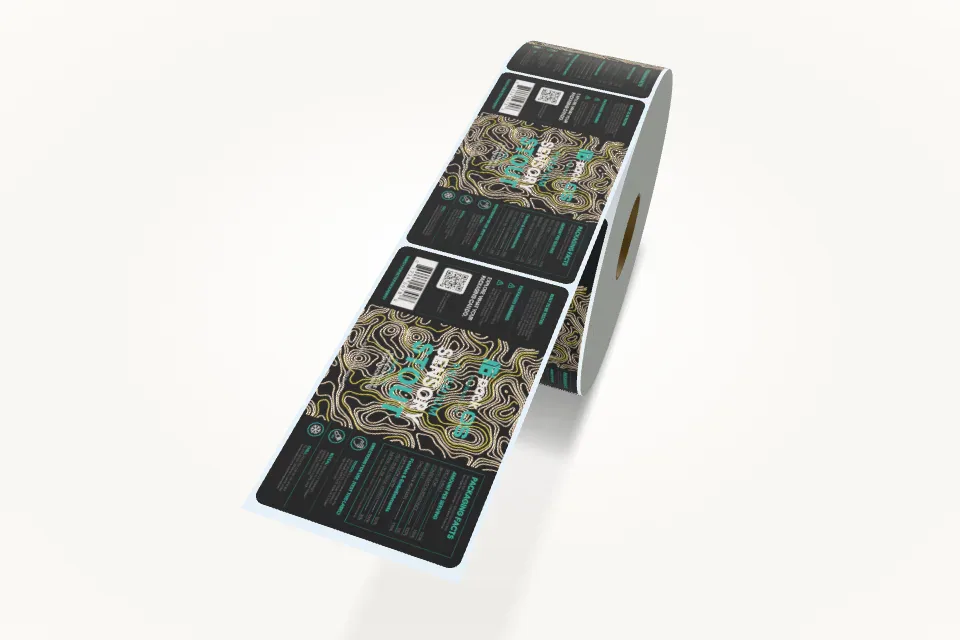
3D unwind chart
Pick the copy position on a 3D roll
Choose wound out or wound in and the edge that comes off first, then put that position on your quote.
Open the unwind chart →Filling sequence, necks and label placement
Record when labeling happens relative to filling, capping, washing, drying and conditioning. Ask the line owner which surfaces and conditions the label encounters at each stage. Include any neck or closure label as a separate position with its own drawing, quantity and application requirement.
Container and closure compatibility belongs with the packaging and filling partners. Label artwork approval does not establish a seal, pressure rating, tamper function or product shelf life. Keep those approvals separate from the decoration record.
Agree the finished-label trial before reading the result
Avery Dennison’s wine-label handbook describes customer-specific ice-bucket protocols. Its historical example is not a universal beverage acceptance standard. Agree the conditioning, exposure and acceptance criteria with the supplier and your operations team. Wine Label Handbook, printed pages 18–19
- IdentifyContainer supplier reference, lot, label position, construction code, artwork revision, printing and finish.
- Set upRecord the applicator, roll specification, actual application conditions and agreed conditioning.
- AgreeDocument the exposure sequence, sample count, observation intervals and acceptance criteria before the trial.
- ObserveRecord attachment, appearance, legibility and line handling separately, with photographs and deviations.
- DecideName the approval owner, restrictions and the exact specification covered by the result.
“The label stayed on” can be true even when its appearance no longer meets the brand requirement. Record both outcomes instead of reducing them to an unexplained pass mark. Do not copy a test duration from another material and assume it qualifies your finished label.
Download the construction trial worksheet (CSV)
This is a blank planning resource with field-by-field instructions. It does not certify performance or approve an order. Keep completed supplier and approval records in your own controlled system; downloading the worksheet does not submit its contents to packOS.
Labeling food or beverage products? Start with the food and beverage label page.
Food and beverage labels →Keep each SKU and label position controlled
Treat front, back, wrap and neck labels as separate items in the SKU schedule. Before each release, check:
- The dimensions, artwork revision and quantities are confirmed for each position.
- The unwind, core and roll outside diameter suit each applicator; do not assume the same values work on every one.
- The unwind specification and roll limits are connected to the release.
- Reorders reference the approved construction and artwork revision rather than the job name alone.
- Changes to the container, line, material, finish or use conditions have been reviewed.
Use the label-cost comparison guide to separate first-order charges from repeat setup and freight. A lower price for a different construction remains a different proposal until requirements and approval status are reconciled.
Keep environmental requirements specific
If recycled content, returnable-container use or an end-of-life route is part of the brief, record the exact requirement and request evidence for the complete package. Identify the market and intended collection or reuse system. The label material name alone does not establish the outcome for the decorated container.
Record the container, label, adhesive and finish references covered by the evidence. Ask the relevant packaging specialist to review proposed substitutions before repeating an environmental claim. Keep that assessment separate from appearance and application-line trials.
Instant label pricing
Upload your artwork and see the price
Drop in a PDF or AI file. PackOS reads the size, shape and colors and prices it from 10,000 labels per size.
Upload artwork →Bring the requirements into a packOS label quote
Upload the label artwork, review the detected attributes and confirm the selected specification and quantities. Keep physical application requirements with your quote request; artwork alone does not establish them. Confirm materials or finishes that are not available in the quote with the team.
packOS currently quotes custom roll labels. Containers, closures and other decoration routes described here provide context for the label decision. Flexible packaging is coming soon. See the food and beverage label program for quote preparation.
Frequently asked questions
Can I choose a beverage label size from the bottle capacity?
No. Capacity does not define the available label panel, diameter, shoulder or surface shape. Confirm dimensions against the container drawing, representative samples and application equipment.
Is a waterproof label automatically suitable for an ice bucket?
The word alone does not define a useful acceptance requirement. Ask what construction was tested, how it was applied, how it was conditioned, how long it was exposed and which outcomes were evaluated. Agree the requirements for your finished label and container.
What is the difference between cold application and cold service?
Application describes the conditions when the label first meets the container. Service describes the conditions afterward. Record both, and ask the supplier to confirm the construction for the intended combination.
Can paper labels be used for beverages?
Some suppliers offer wet-strength and other specialized paper constructions. Treat paper and film as candidate categories, then review the complete construction and finished-label trial evidence for your use.
Should I test the printed label or only the blank material?
Review the finished label proposed for production, including printing and finishing, on a representative container and application setup. Keep the construction code and artwork revision with the trial result.
Do front and back labels use the same roll specification?
Not necessarily. Confirm dimensions, quantity, unwind, core and outside diameter for each position and applicator. Record each position separately even when the artwork belongs to the same product SKU.
Is digital printing always the best choice for beverage labels?
Compare the supplier’s actual route against artwork, construction, quantity by SKU, finishes, releases and delivered cost. The process name alone does not establish the best commercial or technical fit.
Does packOS quote the bottle or can as well as the label?
The current launch quotes custom roll labels. Upload label artwork and confirm its specification and quantities. Bottle, can, closure and other decoration choices in this guide provide context for the label requirements.